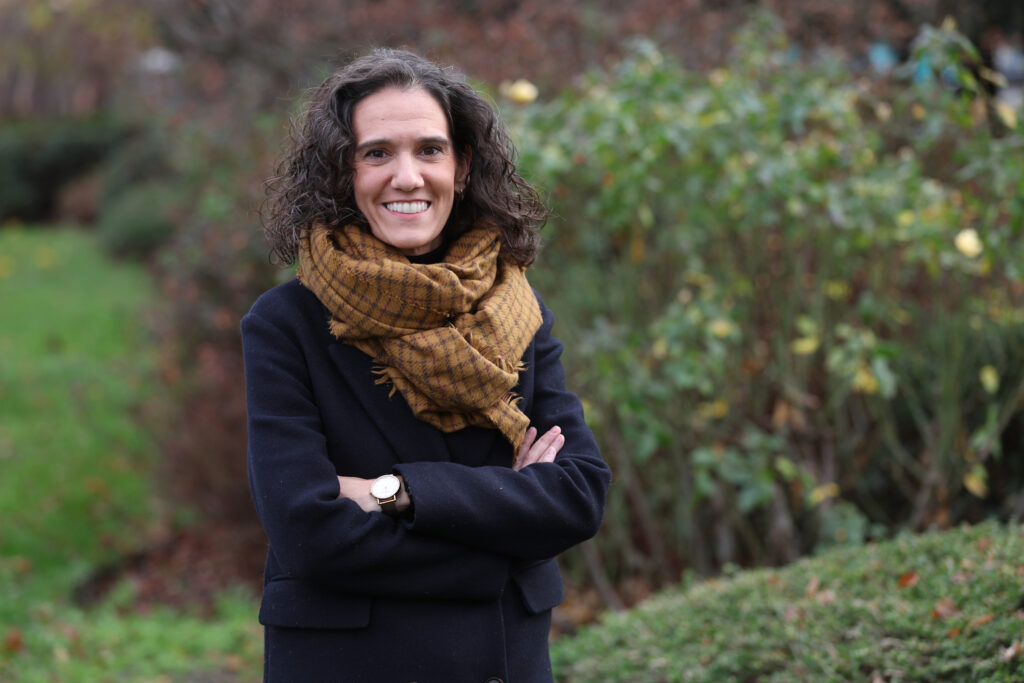
Maite Solas Zubiaurre faces five intense years ahead as she works to prove that a disruptive idea born in the laboratory could open a completely new path in Alzheimer’s research. The researcher from the Faculty of Pharmacy and Nutrition at the University of Navarra recently received a prestigious €2 million ERC Consolidator Grant, which will allow her to acquire cutting-edge technology and expand her research team from five to ten scientists. Her project focuses on the relationship between astrocytes — a type of brain cell — and the development of Alzheimer’s disease.
Solas explains that neurons have traditionally been considered the central cells of the brain, while glial cells were long viewed merely as structural support. However, over the last three decades, scientists have discovered that glial cells perform many essential functions. Among them are astrocytes, which provide critical metabolic support to neurons. “In simple terms, they feed the neurons,” she says. Her research focuses specifically on this role in regulating brain energy metabolism. According to Solas, astrocytes may be the key cells controlling the brain’s energy demands.
The team believes that metabolic alterations in the brain are not simply a consequence of Alzheimer’s disease, as previously thought, but may actually drive its development. Their hypothesis suggests that these metabolic changes occur during the earliest stages of the disease — long before memory loss appears — and primarily affect astrocytes.
One of the project’s main goals is to identify early biomarkers capable of detecting Alzheimer’s before symptoms emerge. Solas hopes that changes in astrocytes could eventually be identified through brain imaging or biomarkers in blood or cerebrospinal fluid, enabling much earlier diagnosis and intervention.
To investigate the hypothesis, the researchers will work with transgenic mice that naturally develop Alzheimer’s-like pathology as they age. This model allows scientists to study the disease at different stages, from the earliest changes to advanced neurodegeneration. The team will also analyze post-mortem human brain samples and cerebrospinal fluid from patients.
The researchers assess disease progression through behavioral tests designed to detect subtle memory impairments in the animals. At the molecular level, they study genes related to metabolism specifically within astrocytes. Solas expects to observe an early phase of hypermetabolism — excessive energy consumption — followed by the hypometabolism commonly associated with advanced Alzheimer’s disease. “Proposing that the disease is not always hypometabolic, but may begin with hypermetabolism that we could potentially stop, represents a complete paradigm shift,” she explains.
The idea emerged gradually through previous experiments in which the team attempted to reduce astrocyte metabolism in transgenic mice. Unexpectedly, the mice remained healthy instead of developing the disease. Initially, the results seemed like a failure, but further investigation revealed that lowering astrocyte metabolism early in the disease process could actually be protective. This surprising finding became the basis for the current hypothesis.
Although Solas believes the project offers hope, she is careful not to create unrealistic expectations. “We have a hypothesis supported by data, but this project will allow us to determine whether it is truly correct,” she says. If confirmed, the research could fundamentally change how scientists understand and treat Alzheimer’s disease.
Solas’s scientific career began with a lifelong fascination for research. She studied pharmacy because it combined biology, chemistry, and helping people. During her doctoral research in pharmacology, she became interested in how stress affects Alzheimer’s disease. Since most Alzheimer’s cases are linked to environmental rather than genetic factors, she focused on how risk factors such as stress alter brain metabolism.
Later, during her postdoctoral work in Germany, she joined a metabolism research laboratory and proposed combining studies of metabolism with Alzheimer’s disease. After returning to the University of Navarra, she made brain metabolism and astrocytes the central focus of her research, exploring how these cells regulate the brain’s energy supply and potentially influence neurodegeneration.